Describe the key types of app maintenance required for enterprise IT systems in India.
Introduction
In India’s fast-paced digital economy, enterprise IT systems—including mobile and web applications—are critical assets that enable operations, customer engagement, analytics, and service delivery across sectors such as banking, retail, healthcare, logistics, and government services. However, the deployment of an enterprise app is only the beginning of its lifecycle. Regular and strategic app maintenance ensures optimal performance, security, compliance, and scalability. For large Indian enterprises, particularly those handling sensitive data and high user traffic, understanding the different types of app maintenance is essential for sustainability and growth. This article outlines the key types of app maintenance required to keep enterprise-grade applications resilient, efficient, and future-ready in the Indian IT context.
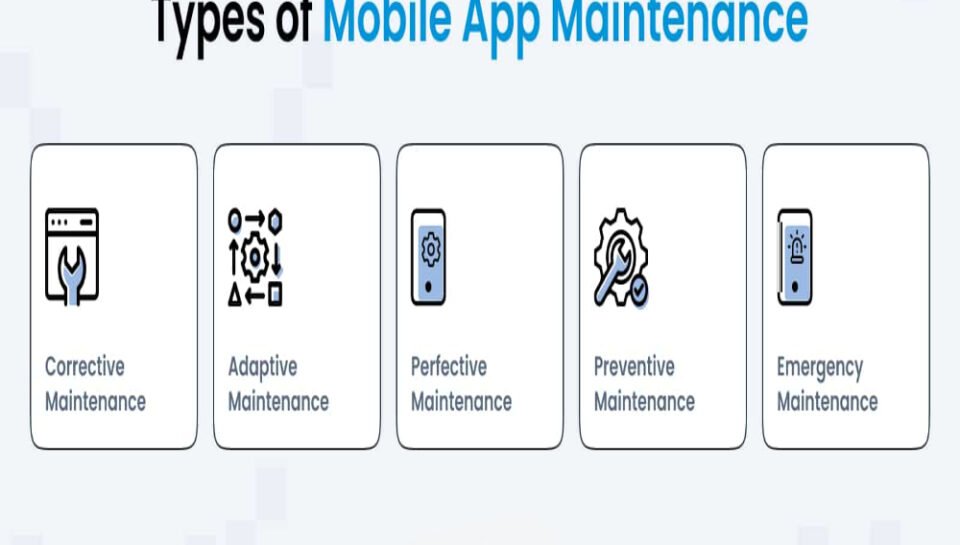
1. Corrective maintenance
Corrective maintenance refers to the identification and resolution of bugs, errors, or failures in an application after it has been deployed. These issues can arise due to coding flaws, unanticipated usage conditions, or platform-specific behavior. For Indian enterprises, where users may access the system across varied devices, networks, and regional settings, bugs can emerge despite robust pre-launch testing.
This type of maintenance ensures:
- Quick resolution of crashes or errors
- Restoration of disrupted services
- Maintenance of service level agreements (SLAs)
It is particularly crucial in sectors like BFSI (Banking, Financial Services, and Insurance), where system downtimes or transaction errors can result in regulatory penalties or customer churn.
2. Adaptive maintenance
Adaptive maintenance involves making modifications to the application so that it continues to function effectively in a changing IT environment. This includes updates required due to changes in:
- Operating systems (Android, iOS, Windows)
- Web browsers (Chrome, Safari, Edge)
- Third-party libraries and SDKs
- Hardware devices and network protocols
In India, where there is frequent usage of budget smartphones and fragmented OS versions, enterprise IT teams must consistently update their apps to ensure compatibility and accessibility. Adaptive maintenance also covers updates required due to external software or API versioning (e.g., Razorpay, NPCI, or Aadhaar authentication APIs).
3. Perfective maintenance
Perfective maintenance focuses on enhancing application features, UI/UX, and performance based on user feedback, analytics, and business strategy. In Indian enterprises, customer demands, market competition, and executive directives drive the continuous refinement of enterprise apps.
This includes:
- Adding new functionalities to meet business goals
- Improving navigation and screen flow for efficiency
- Updating interface design for better engagement
- Rewriting or optimizing code for faster execution
In sectors like e-commerce and telecom, where user experience directly influences revenue, perfective maintenance is a recurring priority. It also allows enterprises to remain innovative and competitive in a fast-evolving digital ecosystem.
4. Preventive maintenance
Preventive maintenance is a proactive approach focused on identifying and resolving potential issues before they impact users. This involves:
- Refactoring outdated or inefficient code
- Performing security audits
- Running load and stress tests
- Optimizing backend databases
- Updating encryption and authentication protocols
In Indian enterprise environments, especially those in the public sector and financial services, preventive maintenance ensures compliance with industry standards, avoids data breaches, and maintains system integrity during high traffic seasons (e.g., tax filing or festival shopping periods).
5. Security maintenance
Given the increasing sophistication of cyber threats in India, security maintenance has emerged as a standalone category. It includes:
- Regular vulnerability assessments
- Timely installation of security patches
- Updating firewall and antivirus rules
- Monitoring for intrusion attempts
- Implementing regulatory data protection policies like GDPR or the Indian Personal Data Protection Bill
Indian enterprises handling sensitive user data—especially in healthcare, banking, and government services—must continuously secure their applications against cyberattacks, phishing, and data leaks. This also involves regular compliance audits to meet RBI, SEBI, or MeitY mandates.
6. Regulatory and compliance maintenance
In India, compliance is a dynamic domain. Enterprises must frequently update their apps to adhere to legal and industry regulations, including:
- RBI guidelines for digital payments and data localization
- GST invoicing updates
- Sector-specific mandates like IRDAI for insurance or TRAI for telecom
- Aadhaar and KYC policy changes
Non-compliance can result in penalties or blacklisting of apps by app stores or government agencies. Regulatory maintenance ensures that enterprise IT systems remain operational, trustworthy, and audit-ready.
7. Localization and regional adaptation maintenance
Given India’s linguistic and cultural diversity, enterprise apps often need regular updates to support multiple regional languages and state-specific operations. This involves:
- Translating new app features into Hindi, Tamil, Bengali, etc.
- Updating localized content and visual assets
- Adapting to region-specific tax structures, time zones, and holidays
This type of maintenance is particularly important for enterprises offering nationwide services, such as insurance, food delivery, or citizen engagement platforms.
8. Infrastructure and backend maintenance
Enterprise-grade apps rely on robust infrastructure—servers, databases, APIs, and cloud services. Infrastructure maintenance includes:
- Monitoring server uptime and performance
- Scaling backend systems during traffic spikes
- Cleaning and optimizing database queries
- Maintaining secure API gateways
- Updating cloud resource configurations (AWS, Azure, etc.)
In India, where digital adoption is surging and outages can go viral on social media, enterprises must ensure round-the-clock infrastructure stability to maintain brand reputation.
9. Integration and third-party dependency maintenance
Most enterprise apps rely on external integrations such as payment gateways, logistics APIs, SMS/email services, or CRM tools. These integrations are periodically updated or deprecated by service providers.
Maintenance in this area involves:
- Tracking changes in partner APIs or SDKs
- Updating authentication tokens
- Ensuring seamless data flow between systems
- Testing and deploying integration patches
For example, if an Indian bank changes its authentication process or a payment gateway introduces a new UPI protocol, the enterprise app must be updated quickly to maintain transactional continuity.
10. Performance and usability maintenance
This focuses on maintaining optimal app speed, responsiveness, and user journey across different network conditions and devices. Key actions include:
- Reducing app load times
- Optimizing app size for low-storage devices
- Minimizing crashes and lags
- Enabling offline access or low-data usage modes
In India, where network conditions can vary widely between urban and rural areas, this maintenance ensures that enterprise apps are inclusive and scalable.
Conclusion
For enterprise IT systems in India, app maintenance is a comprehensive, continuous, and mission-critical process. From bug fixes to adaptive upgrades, and from security patches to regulatory updates, each type of maintenance plays a unique role in ensuring app stability, compliance, and competitive advantage. As digital systems become more central to enterprise operations, businesses must invest strategically in a structured maintenance lifecycle that supports growth, resilience, and innovation in India’s vibrant tech ecosystem.
Hashtags
#AppMaintenanceIndia #EnterpriseITSolutions #CorrectiveMaintenance #AdaptiveMaintenance #PreventiveMaintenance #PerfectiveMaintenance #SecurityMaintenance #ComplianceUpdates #EnterpriseApps #ITSolutionsIndia #AppPerformance #CloudOptimization #DataSecurityIndia #RegulatoryCompliance #ITInfrastructureIndia #ThirdPartyIntegration #DigitalTransformation #LocalizationSupport #AppUXIndia #BackendMaintenance #AppMonitoring #AppResilience #ITGovernance #BusinessContinuityIndia #IndianTechEcosystem