
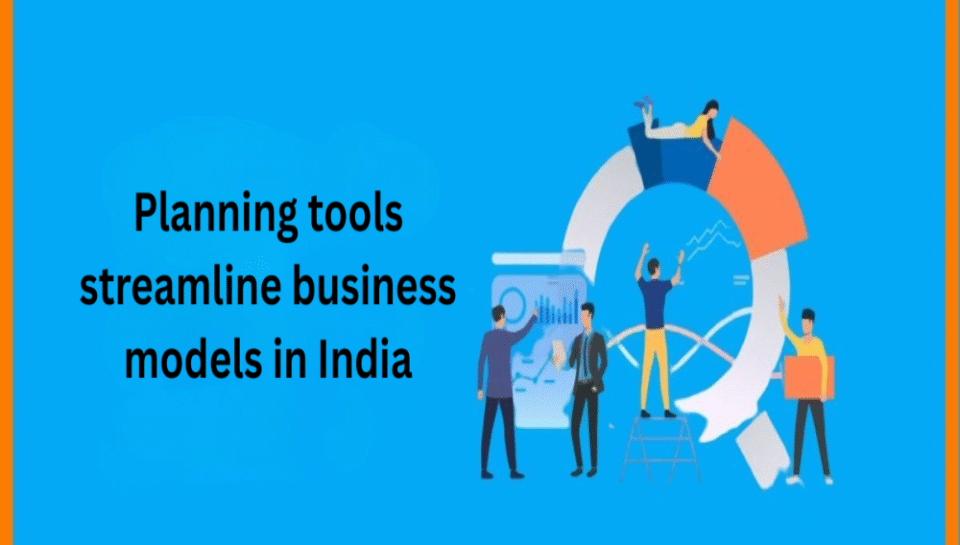
Describe how planning tools streamline business models in India
Introduction
In a fast-paced and diverse economy like India, businesses must constantly refine and adapt their strategies to stay relevant and competitive. Whether it’s a startup entering a niche market or an established company expanding into new regions, having a well-structured business model is essential. However, building and refining such a model manually can be time-consuming and prone to oversight. This is where planning tools come into play. Digital planning tools streamline business models in India by bringing structure, clarity, agility, and collaboration to the entire process, transforming static plans into dynamic, actionable strategies.
Centralization of Strategic Components
Planning tools help Indian businesses consolidate all components of a business model in a single digital workspace. From defining customer segments and value propositions to detailing revenue streams and cost structures, every element can be mapped out using templates like the Business Model Canvas or Lean Canvas. This centralization ensures that the entire strategy is transparent and easily accessible to teams and decision-makers. Instead of juggling fragmented documents or disconnected ideas, businesses can use planning tools to maintain a cohesive and up-to-date model that reflects their evolving goals and market insights.
Simplification of Complex Operations
India’s economic environment is layered with diversity—regional markets, multilingual customers, and sector-specific regulations. Planning tools help businesses navigate this complexity by simplifying operations into logical workflows. For example, an e-commerce company operating in multiple states can use planning tools to plan logistics, inventory movement, and regional marketing strategies, all while factoring in tax structures like GST. This simplification allows business owners to visualize how various elements interact, identify inefficiencies, and streamline operations for better output and cost management.
Alignment of Business Goals with Execution
One of the most important contributions of planning tools is their ability to align high-level strategic goals with ground-level execution. By integrating project management features, task assignments, timelines, and progress tracking, these tools ensure that the business model is not just theoretical but operational. Every part of the model—be it a new product launch, service expansion, or pricing strategy—can be broken down into tasks and milestones, assigned to teams, and tracked for accountability. This connection between planning and doing leads to greater focus and disciplined execution.
Real-Time Collaboration and Decision-Making
Indian businesses, especially those with distributed teams or remote employees, benefit from the collaborative features of planning tools. These platforms allow multiple users to work on the business model simultaneously, share insights, add comments, and upload supporting data. Founders, managers, and stakeholders can contribute in real time, speeding up decision-making and ensuring a broader perspective. This is especially beneficial in startup environments where teams are small but decisions have large implications.
Adaptability and Scenario Planning
Markets in India are volatile and often influenced by regulatory changes, consumer behavior shifts, and macroeconomic conditions. Planning tools allow businesses to create flexible models that can be revised quickly in response to these changes. Through features like scenario analysis and financial simulations, companies can test the impact of price adjustments, cost changes, or market entry strategies before implementing them. This adaptability is crucial for managing risk and staying competitive in uncertain environments.
Integration with Local Financial and Operational Tools
Many planning tools used in India are designed to integrate with accounting systems, CRMs, ERPs, and marketing platforms commonly used by Indian businesses. This allows seamless data flow between different departments and functions. Real-time updates from sales, inventory, or finance teams can feed directly into the planning tool, ensuring that the business model remains grounded in reality. This integration not only saves time but also supports accuracy and consistency in decision-making.
Clarity for External Stakeholders
For Indian businesses seeking funding, partnerships, or government support, a clear and professional business model is essential. Planning tools help create investor-ready business plans, pitch decks, and executive summaries that highlight market opportunity, revenue models, and growth strategies. These outputs enhance the credibility of the business and increase the chances of securing external support. In sectors like fintech, edtech, and agritech, where clarity of model and vision is key to stakeholder confidence, these tools prove invaluable.
Conclusion
Planning tools are playing a transformative role in how business models are developed, refined, and executed in India. By offering structure, automation, collaboration, and adaptability, these tools empower businesses to move from vague ideas to well-defined and actionable strategies. Whether used by a new-age startup or a growing SME, planning tools streamline complex processes, improve strategic alignment, and provide the clarity needed to scale effectively. In a competitive and ever-changing marketplace, such tools are no longer optional—they are essential for building sustainable and successful business models in India.
Hashtags
#BusinessPlanning #IndiaBusiness #StreamlineProcesses #BusinessTools #Entrepreneurship #BusinessModel #EfficiencyInBusiness #PlanningTools #StartupIndia #BusinessGrowth #DigitalTransformation #SMBSuccess #InnovationInBusiness #BusinessStrategy #OperationalExcellence #ProductivityBoost #BusinessDevelopment #TechForBusiness #BusinessSuccess #IndiaEntrepreneurs


